Let's be honest, sometimes keyboarding is boring.
In Business Ed we are taught to go through the keys with the students and we often dictate the keys as they type them.
"AAA...SSS...DDD...FFF" is the first half of home row. That is a good way to help the kids improve and you know what they (should) type but it can sometimes lose the kids. "It's BORING Mr. Burt" they've said.
So in an attempt to help reduce the students being bored, there are several online typing games that can be used to help them improve and some of them can be found at the Gamequarium.
Most of the games are free and all similar in that they range from easy to hard for students of varying skill levels. Alphattack is one such game where the students have to hit the key for the corresponding letter shown on a falling bomb to prevent it from exploding.
------------------------------
There is no specific curriculum like per se, but it is still a highly useful tool for keeping students engaged in the work.
For use in a classroom, this is a fun way to warm the students up, reward them for positive behaviour or just as an exercise if the students have completed an assignment and are sitting around.
If you wanted to get a link to the Evergreen curriculum you could use a keyboarding game once the all the alpha keys have been covered in Module 2: Learning to Keyboard to Touch.
Thursday, January 31, 2008

Tuesday, January 29, 2008
Rome Reborn & Digital Roman Forum
 Save Now
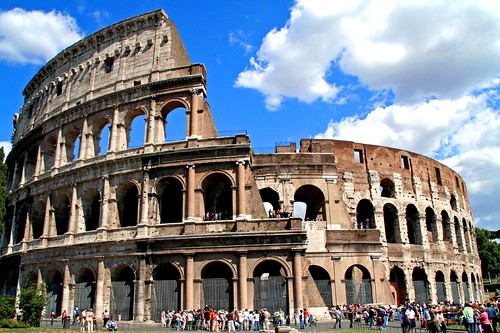
Ancient Rome was vividly brought to life in 2000's Oscar winning movie Gladiator starring Russell Crowe. As the movie nears its climax Crowe's character, Maximus, is brought to Rome to fight in the gladiatorial games occurring inside the roman colosseum. What we see of the roman colosseum, and all the ancient ruins in and around the city, is the result of 2000 years of mistreatment, pollution and disrepair.
While still an impressive monument (recently named one of the NEW 7 Wonders of the World) it looks old. The movie Gladiator brought the splendor of the colosseum and much of ancient Rome to vivid life. Now Rome Reborn and Digital Roman Forum have done it online.
--------------------------------
Rome Reborn offers students several digital Quicktime movies of what it would have been like for a Roman citizen to walk down the various streets. The animation is well done but the movies are small-ish in size. It does offer some amazing high resolution still images of places like the colosseum, the Forum of Julius Caesar and various shots of the city of Rome itself.
The Digital Roman Forum is another site similar to Rome Reborn in that it allows the viewer to take a digital tour of Rome. It is laid out somewhat differently and has some options Rome Reborn does not. One example is the ability to control the view of a building you want to look at (When you move your mouse the view of the building changes). It also offers Quicktime movies, and digital photos.
It offers a good browse function that allows you to find what you want faster as well. For example if a student wanted to know all the Religions structures it would allow that student to find and view the quickly.
--------------------------------
These sites would be great when teaching the Grade 9 Social Studies Time Unit.
For this type of website I would suggest a student use it when doing a project on Ancient Rome. What was the city like? Well, this site would show the class exactly what the city was like (to our best estimations anyway).
The students could also use the site to compare and contrast various aspects or characteristics of the ancient civilizations of Israel and Greece with Rome. Or, have them compare Ancient Rome with Canadian society today.
Students could also investigate some of the links between Canadian culture and Ancient Rome because many of these characteristics have come down to us through time from ancient European cultures, specifically ancient Rome.
Early Child Development
 Developed by the World Bank, the site examines Early Childhood Development and the theory underlying its techniques and programs, benefits gained from ECD interventions, how to design and run and Early Childhood Development program and evaluate its efficacy, and how to do a cost-benefit analysis. The sections entitled 'What is Early Childhood Development' and 'Why Invest in Early Childhood Development' provide excellent information about development stages and socio economic influences.
In the Psychology section of the Evergreen Curriculum, Topic 3.5: Looking
Through the Eyes of the Systems of Supports looks at the Ecological model of Bronfenbrenner to describe the various degrees and types of influence that the systems of support have on infant development.
The website offers insights into what is and is not available for Early Childhood Development.
There are three Activities available at the Topic 3.5: Looking Through the Eyes of the Systems of Supports link that the website would enhance and help give students a better understanding of what's available and how it can help.
World War I Document Archive


The World War I Document Archive is an archive of primary documents from World War I. A primary document is a source of information that was created at roughly the time in question by someone with direct personal knowledge of the events being described and can include: diaries or artifacts.
The World War I Document Archive contains first hand accounts of diaries, official papers, treaties, speeches etc. Another benefit to this site is the documents archived are not just American, British, German, Canadian but are from a wide variety of countries that participated in World War I.
-----------------------------------
This type of resource would best be used when a student was researching something beyond the actual events.
In the Unit One: Death of the Old Order section of History 20, the Russian Revolution is covered.
In that unit the decisions of the Czar are questioned and his actions and inactions set the stage for the Russian Revolution that allowed the Communists to come to power. The World War I Document Archive contains a link to a site with Lenin's call to power.
If a student were to use this site on a project he or she could really capture the feel of the times as written by the people who were there. I think it would also give the students a new perspective on the events because we have the luxury of time to look back, but the writers of the source documents were living history.
-----------------------------------
Not all of the links on The World War I Document Archive go to outside sources, but so do in order to give the largest possible collection of archived material.
Friday, January 25, 2008
Frontline: The Secrect History of the Credit Card
There is no Personal Finance curriculum in Saskatchewan. At all.
One of my assignments last year was to be part of a team that developed a Personal Finance curriculum that would be presentable to Sask Learning. When we looked into what was not covered in teh Evergreen curriculum we found many missing elements that would help students achieve some financial security.
A lot of what was missing is basic, but we found that many parents choose not to discuss financial matters with their children and many think that it is inappropriate to discuss finances in school as well. If that is part of the reason there is no Personal Finance element in the Evergreen I do not know, but what I do know is that students are leaving home for jobs or post-secondary education and they have no idea how to handle money.
Because there is no curriculum I cannot link it to anything. However I feel it is a very important, yet missing, element to a young persons life and that is why I have included it here.
One of my assignments last year was to be part of a team that developed a Personal Finance curriculum that would be presentable to Sask Learning. When we looked into what was not covered in teh Evergreen curriculum we found many missing elements that would help students achieve some financial security.
A lot of what was missing is basic, but we found that many parents choose not to discuss financial matters with their children and many think that it is inappropriate to discuss finances in school as well. If that is part of the reason there is no Personal Finance element in the Evergreen I do not know, but what I do know is that students are leaving home for jobs or post-secondary education and they have no idea how to handle money.
- There is no place to help students learn about handling money.
- There is no place to help students learn about saving or investing money.
- There is no place to help students learn about budgeting for a week, bi-weekly or month.
- There is no place to help students learn about service charges and bank fees.
- There is no place to help students learn about renting a house vs buying a house.
- There is no place to help students learn about leasing a vehicle vs buying a vehicle.
- There is no place to help students learn about interest rates; And
- There is no place to help students learn about credit cards.
The link to the video The Secrect History of the Credit Card is a fantastic video that shows the dangers of misusing a credit card. It contains plenty of relevant and interesting facts and will, hopefully, help make the students aware of what could happen.
---------------------------------Because there is no curriculum I cannot link it to anything. However I feel it is a very important, yet missing, element to a young persons life and that is why I have included it here.
Wednesday, January 23, 2008
Canadian Orders, Medals and Decorations
 The Victoria Cross - For most conspicuous bravery or some daring or pre-eminent act of valour or self-sacrifice or extreme devotion to duty in the presence of the enemy. There have been 1,351 Victoria Crosses awarded worldwide, 94 to Canadians.
-----------------------------
When people think of medals, the image most people conjour is that of veterans gathered for Remembrance Day. But while these honours are generally associated with military service, civilian equivalents exist to honour exceptional contributions to the nation in time of war, or for outstanding acts of citizenship.
Canadian Orders, Medals and Decorations is part of the Veteran Affairs of Canada website. This particular section discusses the various war medals Canadians soldiers have earned throughout the course of its history. Also included on the page are civilian medals that ordinary people have earned for acts of bravery and selflessness.
-----------------------------
This website does not fit into the curriculum in any specific place, but I still think it would be useful in a high school or elementary class.
-----------------------------
I would use this site when having a specific guest speaker come into the class. One of the most inspiring classes I was ever part of was a Canadian History class that covered the two World Wars. My teacher did not believe in just "reading the text" or "watching A&E video's". He wanted us to experience history ourselves.
-----------------------------
One class he had a guest speaker come in. After all these years I cannot remember the man's name but he was a World War II veteran. The gentleman brought in all his war medals (including the Military Medal, The War Medal 1939-1945 and many more I'm forgetting now. He had 15 or twenty overall) along with bullet shells, his uniform and a Nazi dagger.
-----------------------------
This website would allow students to research the reasons a veteran would be awarded the various medals and from there they could prepare a series of questions. Now with many World War II veterans in their 80's now it might be impractical to have one of them come to a school and speak, but the website covers Korea to the present day United Nations Peacekeeping medals.
Sunday, January 20, 2008
Confederation for Kids
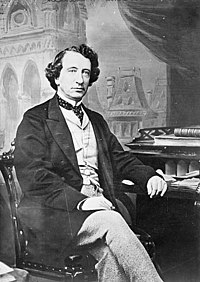 Confederation was the process by which the federal Dominion of Canada was formed beginning 1 July 1867 from the provinces, colonies, and territories of British North America.
Confederation for Kids is a website designed for students ages 9 to 13 to help them discover Canadian Confederation, who was responsible, what happened and why. Background information, the key people concerned with Confederation, and a large number of photographs are included. The teacher section provides many suggested activities with downloadable handouts.
It could be used as a starting point for high school students but the information is somewhat basic and would best be utilized in Elementary schools.
I am not too familiar with the elemenraty curriculum, but I think it is useable in two areas at varying grade levels.
Specifically Grade 8 Social Studies in the unit on The History of Canadian Government Structure.
The unit that it would be best for is in the Grade 5 Unit 2: Heritage section. That unit specifically deals with historical topics such as - Building a Nation: Immigration, the Canadian Pacific Railway, the Treaties, the Wars and Confederation.
In the Unit 2: Heritage section on Confederation students learn about the understanding that confederation occurred in response to a number of situations including:
- British and French immigrants
- wars between France and Britain;
- demand for a more democratic government; and
- threat of absorption by the U.S.A. Confederation marked the beginning of European style
- federal and regional governments and boundaries were established.
- reasons why Confederation was deemed necessary;
- the events and the process;
- major players;
- the short and long term effects on people; and
- how Confederation changed Canada
--------------------------------------
This website has 9 different hand outs and activities and also includes assessment materials for the teacher.
Activity #1 is a great research project for groups of students.
Activity #1 - Building a Nation: How Did Canada Start?
Research Team I
When did the Dominion of Canada come into being?
Which colonies joined the federation? How were they reorganized in 1867?
What is the difference between a province and a territory?
When and how have new provinces or territories been created?
Which ones joined Confederation as full partners?
Research Team II
Why was this new country Canada formed?
Do you think these same reasons exist for today's Canada?
Are there new reasons for the existence of the country called Canada today?
Research Team III
Where and when did the three important meetings (Conferences) leading to the creation of Canada take place?
Why is the term "Fathers of Confederation" confusing? Who did these men represent?
Who was not (directly) represented at the Conferences in 1864-1866 (and later)? Why were they excluded?
Which groups do you think should be represented at a meeting to discuss today's Canada?
Research Team IV
What assets (strengths) did each of the new groups/regions bring to the newly formed country?
Are these the same strengths that are valued/important in today's Canada?
Research Team V
What document was produced by the delegates at the three Conferences?
What were the major points of this constitutional legislation?
Is this document still in use in today's Canada?
What types of documents were used to define the boundaries and status of new provinces (Manitoba, Alberta, Saskatchewan) or when other colonies joined Confederation?
Research Team VI
Can you locate maps to show the territory of Canada from 1886 to the present?
What are the major differences between Canada's provincial and national borders in 1867, 1870, 1882, 1898, 1905, 1912, 1927, 1949 and today?
Subscribe to:
Posts (Atom)
